Is There a Legal Difference Between a Caregiver and a Domestic Helper?
In Singapore, there isn’t a separate work pass category for caregivers. Eldercare and general caregiving duties are placed under the exact same Migrant Domestic Worker (MDW) Work Permit framework as cleaning, cooking, or childcare. So legally, the two roles sit under one umbrella — the difference comes from how a helper is sourced, screened, and matched, not from a different category of permit.
So What Actually Differs?
If the legal framework is the same, the real distinction comes down to aptitude and preparation, not paperwork.
Screening and Matching
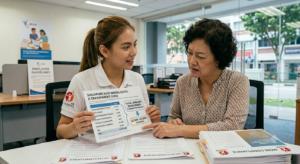
A general domestic helper placement is matched primarily on household fit — cooking style, childcare needs, language, and general household routines. A caregiver placement involves additional screening specifically for caregiving aptitude: experience with mobility support, patience with repetitive or physically demanding tasks, and comfort working closely with an elderly or recovering individual.
Training
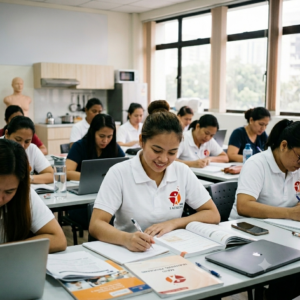
Not every helper is automatically equipped to provide quality eldercare. As MOM itself notes, caregiving requires specific aptitude and training that a generic placement doesn’t guarantee. Agencies that take caregiver placements seriously will screen for this directly, and in some cases arrange supplementary training, rather than placing whichever helper happens to be available.
The Nature of the Work
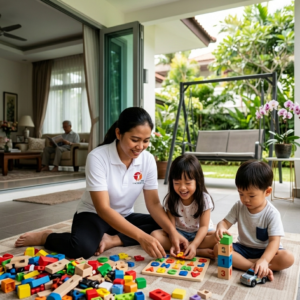
General domestic duties are largely task-based — cleaning, cooking, errands. Caregiving is more relational and physically demanding over time: mobility assistance, companionship, and day-to-day support for someone who may need help with basic activities of daily living.
What a Caregiver Placement Does Not Mean
This is worth being direct about, since expectations matter here. A helper placed for caregiving is not a licensed nurse or medical professional. She cannot administer medical treatment, give injections, or manage complex medical equipment. Her role covers non-medical daily care and support.
For clients with significant clinical needs, a helper’s support typically works best alongside professional home nursing or medical care — not as a replacement for it.
A transparent agency will tell you clearly if a placement isn’t the right fit for a particular care need, rather than placing a helper into a situation she isn’t equipped for.
When Does a Family Need a Caregiver Specifically?
- An ageing parent or relative needs daily living support, mobility assistance, or companionship
- Someone in the household is recovering from surgery or a medical procedure and needs short or longer-term support
- A family member has health or mobility needs that go beyond general housekeeping, even if not requiring full medical care
If none of these apply, a standard domestic helper placement is likely the right fit — there’s no need to default to a caregiver-specific search just because eldercare is mentioned somewhere in your household’s needs.
How We Approach Caregiver Placements
We place caregivers through our established partnerships in the healthcare sector, which gives us access to candidates with relevant training and experience beyond a standard helper placement. We also ask more specific questions upfront — communication needs, physical requirements, and prior experience with similar conditions — so the match is built around the actual care situation, not just general availability.
Looking for the right caregiver for your family? Get in touch and we’ll be upfront about what’s achievable →